What Is STI Testing?
The Speech Transmission Index (STI) is an objective measure of how well speech is transmitted from a talker or loudspeaker to a listener. It is rated on a scale from 0 to 1, where higher values mean clearer speech. STI takes account of the main things that blur speech: background noise, reverberation and echoes.
For public address (PA) and voice alarm (VA) systems, STI testing provides measured evidence that announcements, including emergency messages, can be understood in the areas they serve.
Intelligibility depends on the whole chain: the microphone or recorded message, the amplifiers and processing, the loudspeakers and their positions, and the acoustics of the space itself. STI testing measures the combined result at the listener, which is what matters to the people in the building.
When Do You Need STI Testing?
- Voice alarm commissioning: where a VA system forms part of the fire strategy and its intelligibility must be verified before handover.
- Transport: stations, platforms and concourses where public announcements must be heard over trains, crowds and ventilation noise.
- Schools and education: halls and large teaching spaces with PA systems.
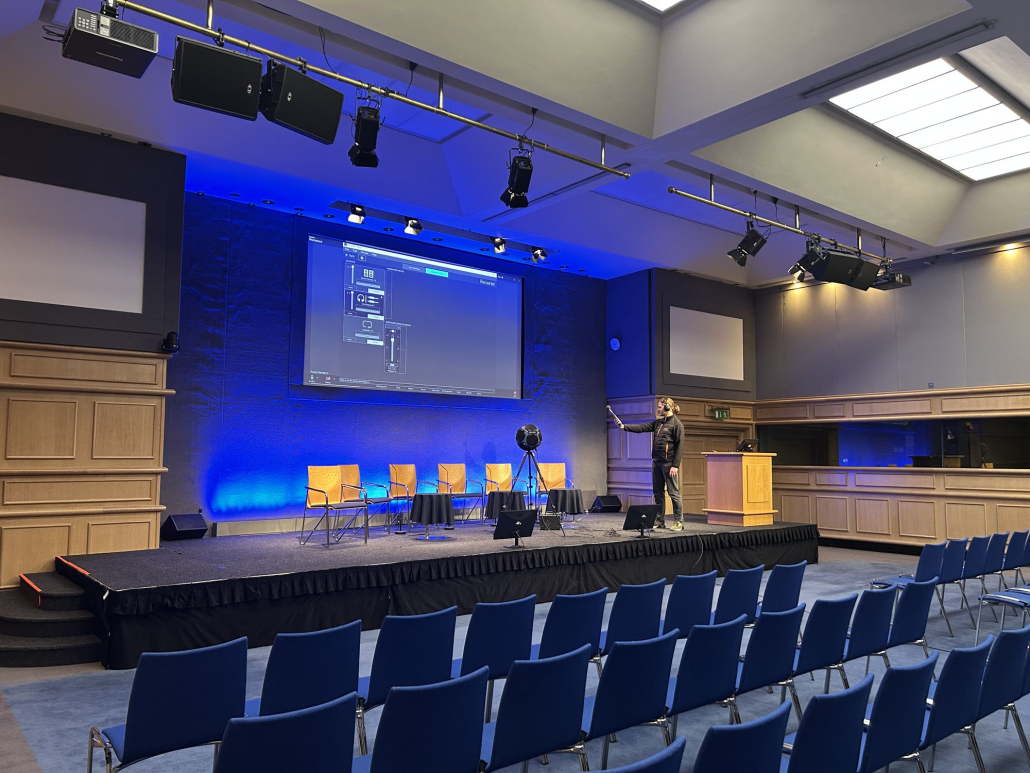
- Auditoria and venues: theatres, conference spaces and arenas where both speech reinforcement and emergency messaging matter.
- Upgrades and disputes: where an existing system is suspected of underperforming or has been modified.
What We Measure
We measure STI at representative listener positions across each acoustically distinct zone served by the system. Measurements are usually made with the STIPA method, which plays a test signal through the system and analyses it at the listener position. We also record background noise levels and, where relevant, reverberation time, so that results can be adjusted for expected operating conditions and the causes of poor intelligibility can be identified.
Where a voice alarm system covers many similar rooms, such as classrooms or hotel corridors, we agree a sampling approach with the fire engineer or client, testing a representative selection along with every space that is acoustically unusual.
Our Approach
- Review the system and criteria: we confirm the zones, the intelligibility target and the conditions under which it applies, for example occupied or unoccupied.
- Plan the measurement grid: positions are chosen to represent each zone, including areas likely to be worst affected.
- Measure: the STIPA test signal is played through the system at its normal operating level and measured with a calibrated meter.
- Correct for noise: where the space will be noisier in use than during testing, background noise data is used to adjust results.
- Report and advise: results are compared with the target and any shortfalls are explained.
Standards and Guidance
- Measurement: IEC 60268-16:2020, Sound system equipment, Part 16: Objective rating of speech intelligibility by speech transmission index.
- Voice alarm systems (UK): BS 5839-8, Fire detection and fire alarm systems for buildings, code of practice for voice alarm systems.
- Sound systems for emergency purposes: EN 50849:2017.
- Equipment: the EN 54 series, including EN 54-16 for voice alarm control and indicating equipment and EN 54-24 for voice alarm loudspeakers, published in Ireland as I.S. EN 54.
What You Receive
A test report setting out the zones and positions tested, the system operating conditions, measured STI values, background noise levels, any corrections applied and a clear comparison with the target. Where a zone does not achieve its target, the report identifies whether the limiting factor is noise, reverberation or system set-up, which helps the installer and design team decide what to change.
Results can also be presented on floor plans, so zones that pass, zones close to the limit and zones that fail are easy to see. This makes it simpler for the fire engineer, installer and client to agree any further work and to plan retesting.
Common Issues and How We Avoid Them
Low STI results are usually caused by one of three things: highly reverberant spaces, high background noise from plant or the activity in the space, or loudspeakers that are poorly positioned, aimed or set up. Adjusting levels alone rarely solves a reverberation problem, and turning a system up in a noisy space has limits.
Because we also carry out reverberation time testing and room acoustic design, we can separate room effects from system effects and recommend whether the fix lies with acoustic treatment, the loudspeaker layout or the system settings. Plant noise affecting intelligibility can be addressed through our plant noise assessments.
Testing conditions also matter. Measuring with doors open that will normally be closed, with temporary plant running, or before acoustic finishes are installed can all give results that do not reflect the finished building. We agree test conditions in advance and record them in the report, so that results are fair and repeatable if retesting is needed.
Why Wave Dynamics
We carry out speech intelligibility testing at stations and in other public spaces, and we bring a building acoustics background to the results. That means our reports explain why a system performs as it does, not only whether it passes. STI testing can be combined with other acoustic commissioning tests on the same visit.
Bringing STI testing in early, alongside room acoustic design and reverberation targets, reduces the risk that a voice alarm system is installed in a space where it cannot reach its target without costly late changes to finishes or loudspeaker layouts.
Frequently Asked Questions
What STI value is usually required?
The target is set by the project specification and the relevant standard. For voice alarm systems an average of at least 0.50 is commonly specified, with limits on how low individual positions can fall. Some spaces, such as large reverberant halls, may have different targets agreed with the fire engineer. We confirm the target before testing.
What is STIPA?
STIPA is a simplified method of measuring STI described in IEC 60268-16. A special test signal is played through the PA or VA system and analysed by a meter at the listener position. It gives a reliable result in a short time, which makes it practical for measuring many positions across a building.
Does the building need to be occupied during testing?
No. Testing is usually done in unoccupied spaces, often out of hours, so that measurements are not disturbed. Where the space will be noisier in use, for example a busy concourse, background noise measured or predicted for normal use is used to correct the results so they reflect real operating conditions.
Who should be present during testing?
A representative of the system installer should be available to operate the system, route the test signal to each zone and make adjustments if needed. Access to all zones and coordination with the building manager are also required, particularly in live buildings such as stations where announcements must be managed.
Can STI be predicted at design stage?
Yes. STI can be estimated using room acoustic modelling that includes the loudspeaker layout and room finishes. Early prediction helps the design team set realistic targets and spot spaces that need acoustic treatment, which reduces the risk of a failed commissioning test later.
Is STI the same as how loud the system is?
No. A system can be very loud and still unintelligible if the room is reverberant or echoes are strong. STI measures how much the speech signal is degraded, not its level. A good result needs adequate level above background noise, controlled reverberation and well placed loudspeakers.






 Jon Maguire (BSc Hons MIOA) brings over 8 years of expertise in acoustic consultancy, specialising in environmental acoustics with a focus on 3D modelling, assessments, and detailed design for industrial, commercial, and energy projects. He has lead noise assessments for key clients while thriving in multidisciplinary environments. Jon’s diplomatic communication skills are ideal for stakeholder consultation.
 Jack is a Field Engineer at Wave Dynamics, supporting the delivery of environmental monitoring and acoustic consultancy services through detailed on-site fieldwork. He has hands-on experience in noise monitoring, vibration monitoring, and dust monitoring across a variety of infrastructure, construction, and environmental projects. Jack is involved in the setup, operation, and maintenance of monitoring equipment, ensuring accurate data collection in line with relevant standards and project requirements. He works closely with consultants and project teams, providing reliable field support that underpins high-quality assessments and reporting.
 Aidan is the Director for all U.K Operations and has worked in multiple industries including for clients in the UK and internationally operating in the residential, industry, healthcare, education, and construction sectors.


