What Is a Plant Noise Assessment?
A plant noise assessment predicts or measures the sound from fixed mechanical and electrical equipment, such as air handling units, condensers, chillers, heat pumps, extract fans, generators and transformers, and compares it with the existing background sound at the nearest noise-sensitive receptors.
For residential receptors in Ireland and the UK this is normally done using BS 4142:2014+A1:2019, which compares a rating level for the plant with the typical background sound level to give an initial estimate of impact, then weighs that against context.
The method also applies to many commercial and light industrial sources beyond building services, including loading bays, car washes, refrigerated vehicles parked on site and fixed processing equipment. The same principles carry across: describe the source accurately, establish the background properly, and account for how and when the sound occurs.
When Do You Need One?
Planning authorities commonly ask for a plant noise assessment where a development introduces new external plant near homes, hotels or other sensitive uses. Typical triggers include:
- A planning application with rooftop or external plant on a mixed-use, retail, commercial or residential scheme
- A planning condition setting a plant noise limit relative to background, or a fixed limit at the nearest dwelling
- Data centres, cold stores, supermarkets and industrial units with continuous or night-time plant
- Replacement or added plant on an existing building
- A noise complaint where the source is building services equipment
Early input is worth having: plant selection and position are far cheaper to change at design stage than after installation.
Some local authorities set a plant noise limit expressed as a margin below the existing background level, while others refer directly to the BS 4142 outcome. Where the wording of a condition is unclear, we help interpret it and agree an approach with the environmental health officer before the survey begins, so the assessment answers the question actually being asked.
What We Assess
- Background sound: unattended logging at representative locations to establish typical day and night LA90 levels
- Plant source data: manufacturers’ sound power or pressure data for each unit at its duty point
- Propagation: distance, screening by parapets and buildings, reflections and the number of units operating together
- Character: tonality, impulsivity, intermittency and other distinctive features that attract a rating penalty
- Operating hours: which plant runs at night, when the lowest background usually governs
- Internal levels: where needed, plant noise inside nearby rooms against BS 8233:2014 targets
Our Approach
We start with a baseline survey to set the background level, ideally covering the quietest periods when the plant will operate. Where plant is already installed, we measure it directly at the receptor or close to the source.
We then build a calculation or 3D noise model of the plant layout, apply character corrections where the sound is likely to be tonal or intermittent, and compare the rating level with the background. Where limits are exceeded, we test mitigation options until the scheme complies, and set a cumulative plant noise limit the design team and contractor can work to.
Long-term logging is available through our noise monitoring service where background levels vary or a condition requires it.
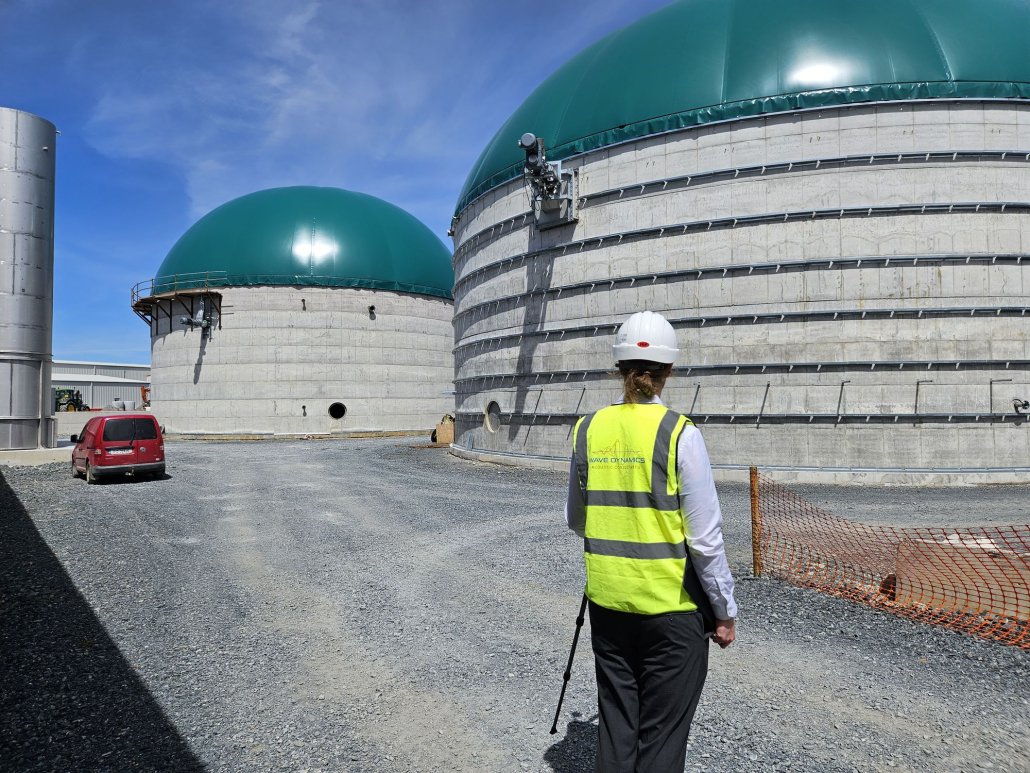
For larger schemes, such as data centres with many generators and cooling units, we assess normal operation and emergency or testing scenarios separately, since generator testing is usually limited to set daytime hours and can be controlled through operating procedures as well as physical mitigation.
Standards and Guidance
- BS 4142:2014+A1:2019 Methods for rating and assessing industrial and commercial sound
- BS 8233:2014 Guidance on sound insulation and noise reduction for buildings
- EPA Guidance Note for Noise (NG4), for sites licensed by the Environmental Protection Agency in Ireland
- Local authority planning conditions and development plan noise policies
BS 4142 is not intended for assessing music or entertainment noise, which we cover through entertainment noise assessments.
What You Receive
A clear report suitable for a planning submission or condition discharge, setting out the survey results, the plant schedule assessed, the predicted rating levels at each receptor, the BS 4142 outcome with context, and a cumulative plant noise limit. Where mitigation is needed, we specify the performance required, such as attenuator insertion loss, barrier height and position, or enclosure performance, so it can be priced and built.
We can also review the mechanical contractor’s final plant selections against the agreed limit before orders are placed, and provide a short compliance note for condition discharge once installed plant has been measured.
Common Issues and How We Avoid Them
- Background measured at the wrong time: we survey across the hours the plant will actually run, including night-time
- Plant data at the wrong duty: we check that manufacturer data matches the selected unit and operating mode, including night set-back
- Ignoring cumulative noise: we assess all units together, not one at a time
- Missed tonal content: we flag units likely to be tonal, which can add a significant penalty
- Late plant changes: we give the design team a single limit to check substitute equipment against
Where the planning authority or a neighbour raises questions after submission, we provide technical responses that refer back to the survey data and calculations, keeping the discussion factual and focused on the relevant standard.
Why Wave Dynamics
Our consultants combine measurement, modelling and practical knowledge of how plant is selected and installed, so mitigation advice fits the building rather than sitting in a report. We work across Ireland and the UK, from single condenser units to data centre plant, and can follow through with compliance surveys once the plant is running.
Frequently Asked Questions
What is the difference between the rating level and the specific sound level?
The specific sound level is the plant noise alone at the receptor. The rating level is that level plus any corrections for tonal, impulsive, intermittent or other distinctive character. BS 4142 compares the rating level, not the specific level, with the background, so character can matter as much as loudness.
Does a rating level 10 dB above background always mean refusal?
Not automatically. BS 4142 says a difference of around +10 dB or more is likely to indicate a significant adverse impact, depending on context. Absolute levels, the character of the area and the residual sound are all considered, which is why a well-argued assessment matters.
Can you assess plant before the equipment has been chosen?
Yes. At early design stage we can work back from the background level to set a maximum sound power for each plant area. The mechanical engineer then selects units that meet it, which avoids redesign later.
How long should the background survey run?
Long enough to capture typical background levels for the periods the plant will operate, including quieter night-time hours if plant runs at night. The duration depends on the site, the weather and any planning requirements, and we agree it at the outset.
What mitigation works best for rooftop plant?
It depends on the source. Options include quieter unit selection, relocating plant away from receptors, acoustic screens, in-duct attenuators, louvres and full enclosures. Reducing fan speed at night is often the simplest gain where controls allow it.
Can you help with a plant noise complaint on an existing building?
Yes. We measure the plant at the complainant’s property and at source, identify which units and frequencies are responsible, and recommend targeted fixes. This often avoids replacing equipment unnecessarily and gives the owner a clear record to share with the local authority.






 Jon Maguire (BSc Hons MIOA) brings over 8 years of expertise in acoustic consultancy, specialising in environmental acoustics with a focus on 3D modelling, assessments, and detailed design for industrial, commercial, and energy projects. He has lead noise assessments for key clients while thriving in multidisciplinary environments. Jon’s diplomatic communication skills are ideal for stakeholder consultation.
 Jack is a Field Engineer at Wave Dynamics, supporting the delivery of environmental monitoring and acoustic consultancy services through detailed on-site fieldwork. He has hands-on experience in noise monitoring, vibration monitoring, and dust monitoring across a variety of infrastructure, construction, and environmental projects. Jack is involved in the setup, operation, and maintenance of monitoring equipment, ensuring accurate data collection in line with relevant standards and project requirements. He works closely with consultants and project teams, providing reliable field support that underpins high-quality assessments and reporting.
 Aidan is the Director for all U.K Operations and has worked in multiple industries including for clients in the UK and internationally operating in the residential, industry, healthcare, education, and construction sectors.


