What Is a Construction Noise and Vibration Assessment?
Demolition, excavation, piling, ground works and building operations produce noise and vibration that can affect nearby homes, schools, hospitals and sensitive buildings. A construction assessment identifies the noisiest activities, predicts their effect at each receptor, compares the results with suitable thresholds and sets out how they will be controlled.
In Ireland and the UK the main reference is BS 5228, Part 1 for noise and Part 2 for vibration.
The assessment covers both the effect on people, such as disturbance, sleep and the use of homes and workplaces, and the effect on buildings and structures, including sensitive equipment, historic fabric and buried services where relevant.
When Do You Need One?
- Planning applications and EIAR chapters for developments near sensitive receptors
- Road, rail and infrastructure schemes, where TII or other scheme guidance applies
- Preparing or updating a Construction Environmental Management Plan (CEMP)
- Piling, rock breaking, vibratory compaction or demolition near existing buildings
- Discharging planning conditions on construction noise, vibration or working hours
- Responding to complaints during the works
Construction impacts are temporary, but on longer programmes, or where several phases follow each other, residents may experience them for months or years. Planning authorities increasingly expect a robust assessment and a clear commitment to monitoring and community engagement before works start.
What We Assess
- Baseline noise at the nearest receptors, which sets the thresholds under the BS 5228-1 ABC method
- Activity noise by phase, using plant source data from BS 5228-1 Annexes C and D or measured data
- Ground-borne vibration from piling, compaction and breaking, with reference to empirical prediction methods in BS 5228-2
- Human response to vibration inside occupied buildings
- Risk of cosmetic building damage against BS 7385-2:1993 guide values
- Construction traffic noise on access routes, where relevant
We also identify receptors that need particular care, such as hospitals, schools during exam periods, laboratories with vibration-sensitive equipment, and listed or structurally weak buildings, where general thresholds may not be enough and site-specific limits are appropriate.
Our Approach
We review the construction programme and methodology with the contractor or design team, then carry out a baseline survey at representative receptors. The baseline sets the threshold category under the ABC method: for example, Category A sites, the quietest, have thresholds of 65, 55 and 45 dB LAeq for daytime, evenings and weekends, and night-time respectively.
We predict noise and vibration for each phase and identify when and where thresholds may be exceeded. Mitigation is then tailored to the site: equipment choice, quieter piling methods, hoarding and screens, working hours, respite periods and community liaison. Where risk remains, we specify a noise monitoring and vibration monitoring regime with trigger and limit levels.
Where works will run outside normal hours, such as night-time concrete pours, road closures or rail possessions, we assess these periods separately against the lower evening and night thresholds and advise on notification, scheduling and additional controls.
Standards and Guidance
- BS 5228-1:2009+A1:2014 Code of practice for noise and vibration control on construction and open sites, Part 1: Noise
- BS 5228-2:2009+A1:2014 Part 2: Vibration
- BS 7385-2:1993 Evaluation and measurement for vibration in buildings, guide to damage levels from groundborne vibration
- BS 6472-1:2008 Guide to evaluation of human exposure to vibration in buildings
- Transport Infrastructure Ireland (TII) guidance on noise and vibration for national road schemes
- Control of Pollution Act 1974, including Section 61 prior consent, for works in England and Wales
Where a planning authority or scheme sets its own criteria, those take precedence, and we show how the BS 5228 approach and any project-specific limits relate to each other so the contractor has one clear set of numbers to work to.
What You Receive
A report or EIAR chapter setting out the baseline, construction phases, predicted levels at each receptor, significance against the applicable thresholds and the mitigation required. We can provide the noise and vibration section of a CEMP, including working hours, best practicable means, monitoring locations, trigger levels and the response procedure when a trigger is reached.
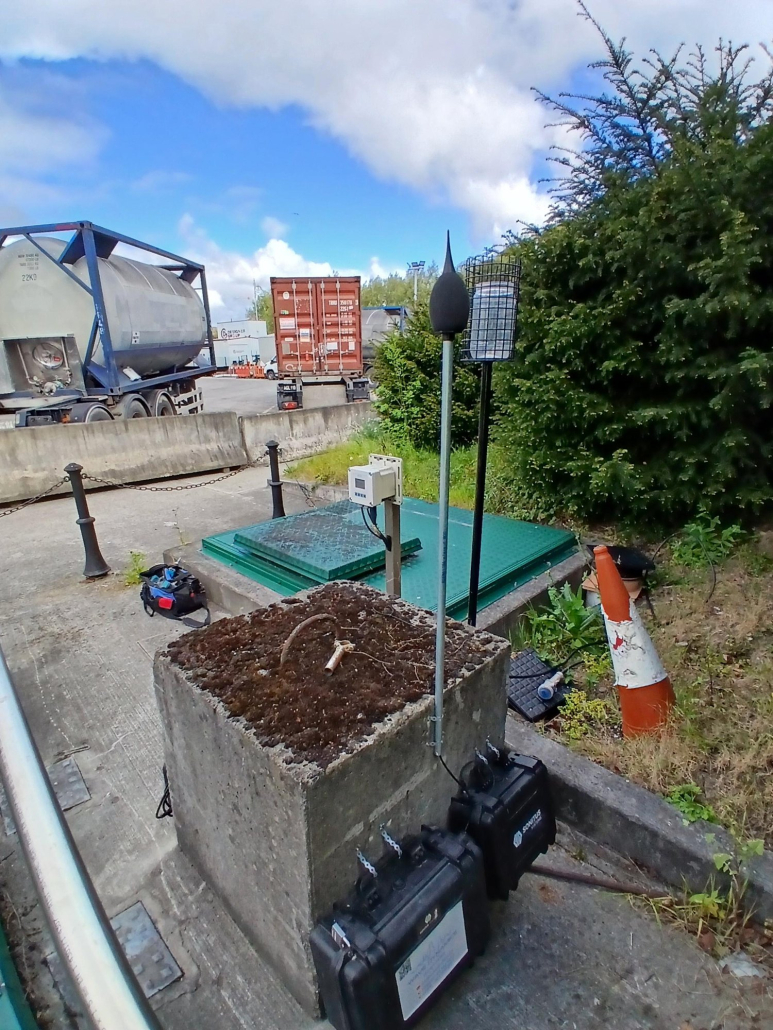
Once works begin, we can install and manage monitoring, issue regular reports against the agreed triggers, and review any exceedances with the site team so the cause is understood and corrected. Assessment and monitoring use the same criteria, which keeps reporting consistent.
Common Issues and How We Avoid Them
- Limits that cannot be met: we test thresholds against the real programme so the contractor can work to them
- Assuming piling method: we compare methods, as bored, CFA and driven piles produce very different vibration
- Confusing damage and disturbance: vibration felt by residents is usually far below levels that cause cosmetic damage, and we explain both clearly
- Monitoring without action: we link triggers to defined responses, not just alerts
- No baseline record: we recommend condition surveys of sensitive buildings where risk is identified
We also make sure communication with neighbours is built into the CEMP, since advance notice of noisy or vibrating activities often reduces complaints as much as physical controls.
Why Wave Dynamics
We assess construction noise and vibration on residential, commercial and road projects, and provide the monitoring that follows, so the limits in the assessment are the same ones measured on site. Our advice is practical for contractors and clear for local authorities and neighbours. For operational vibration, see our vibration services.
Frequently Asked Questions
Do planning authorities set fixed construction noise limits?
Some do, through planning conditions that specify working hours or noise limits at the nearest dwelling. Others rely on the developer’s assessment and CEMP. We check the conditions and development plan policy for the site and design the assessment to satisfy them.
Can piling vibration damage neighbouring buildings?
Cosmetic damage from typical piling is uncommon at normal working distances, as the vibration needed is well above what people find disturbing. Risk increases close to the works, with driven or vibratory methods, and for sensitive or historic structures. We assess the risk and advise on method and monitoring.
What is a Section 61 consent?
In England and Wales, contractors can apply to the local authority for prior consent under Section 61 of the Control of Pollution Act 1974, agreeing methods, hours and noise levels in advance. It does not apply in Ireland or Northern Ireland, where conditions and CEMPs are used instead.
How is construction traffic noise assessed?
Where construction traffic adds significantly to flows on local roads, we compare predicted road traffic noise with and without the works. Short-term increases on lightly trafficked roads can be noticeable, so routes and delivery times are often part of the mitigation.
When should noise and vibration monitoring start?
Ideally before works begin, to confirm the baseline and test the monitoring set-up, then throughout the noisiest phases such as demolition, piling and ground works. Monitoring can often be scaled back once those phases finish, subject to any planning conditions.
What if a resident complains during the works?
We review monitoring data for the time of the complaint, identify the activity responsible and recommend adjustments, such as changing working methods, moving plant or adding screening. Clear records help show the contractor has applied best practicable means.






 Jon Maguire (BSc Hons MIOA) brings over 8 years of expertise in acoustic consultancy, specialising in environmental acoustics with a focus on 3D modelling, assessments, and detailed design for industrial, commercial, and energy projects. He has lead noise assessments for key clients while thriving in multidisciplinary environments. Jon’s diplomatic communication skills are ideal for stakeholder consultation.
 Jack is a Field Engineer at Wave Dynamics, supporting the delivery of environmental monitoring and acoustic consultancy services through detailed on-site fieldwork. He has hands-on experience in noise monitoring, vibration monitoring, and dust monitoring across a variety of infrastructure, construction, and environmental projects. Jack is involved in the setup, operation, and maintenance of monitoring equipment, ensuring accurate data collection in line with relevant standards and project requirements. He works closely with consultants and project teams, providing reliable field support that underpins high-quality assessments and reporting.
 Aidan is the Director for all U.K Operations and has worked in multiple industries including for clients in the UK and internationally operating in the residential, industry, healthcare, education, and construction sectors.


